
Why retire to Italy?
With its unique blend of beauty and quality of life, Italy continues to be one of the most desirable retirement destinations in the world. But let’s take a closer look at what makes retiring in Italy so special.
Best places to retire in Italy
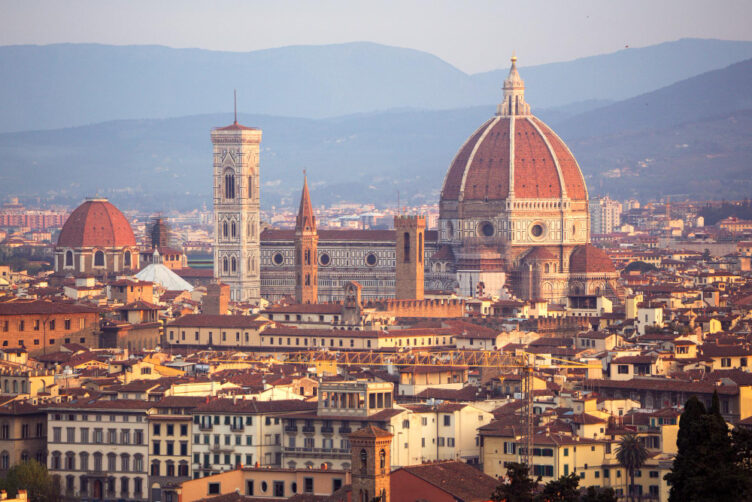
Choosing where to retire in Italy is not only about budget.
For many foreign retirees, the best region depends on a mix of factors, including day-to-day costs, access to healthcare, transport links, and overall lifestyle.
Some areas are more affordable, others offer stronger services or better connections, while some stand out for their scenery, pace of life, and cultural appeal.
The table below gives a quick overview of some of the most popular regions among foreign retirees in Italy.
| Region | Why people choose it | Average rent (1-bedroom) | Notes |
|---|---|---|---|
| Sicily | Very affordable, warm climate, relaxed lifestyle | €300 – €600 | Among the cheapest regions in Italy |
| Puglia | Coastal lifestyle, good value for money | €400 – €700 | Popular with expats in the south |
| Tuscany | High quality of life, culture, services | €700 – €1,200 | More expensive in cities like Florence |
| Abruzzo | Low cost, nature, quieter lifestyle | €300 – €600 | Growing interest from foreigners |
| Umbria | Peaceful, central location, authentic lifestyle | €500 – €800 | Similar to Tuscany but more affordable |
| Sardinia | Beautiful coastline, slower pace of life | €500 – €900 | Prices vary between inland and coast |
Source: Idealista, Numbeo and International Living (data consulted: 2025).
Some of the best regions to retire in Italy include Abruzzo and Sicily for affordability, Tuscany and Liguria for lifestyle and overall appeal, Umbria for its balance of services and slower pace of life, and Puglia for sunshine and coastal living.
One of Italy’s greatest advantages is its variety. From art cities like Rome, Florence, and Venice to smaller gems such as San Gimignano and Matera, and from the Alps to the Mediterranean islands, every region offers a different setting and way of life.
This variety is one of the reasons why Italy is so appealing to retirees. Beyond the major cities, smaller towns and villages offer a slower pace and a culture deeply connected to food, tradition, and everyday quality of life.
Costs and tax benefits for retirees
One of the biggest surprises for many retirees is how affordable Italy can be.
Of course, costs vary by location: cities such as Milan and Rome are more expensive, but many small towns and central or southern regions offer substantially lower housing costs and a relaxed, high-quality lifestyle. In many provincial areas, long-term rentals typically range between €400 and €800 per month, depending on size and location.
Everyday goods and services cost roughly 35–40% less than in the main US cities, and Italy remains more affordable than many Central and Northern European nations.
And there’s more. Italy offers an optional 7% substitute tax regime for certain foreign pensioners who move their tax residence to eligible municipalities, generally with fewer than 20,000 inhabitants, in Southern Italy. The regime can apply for up to nine tax periods.
Some municipalities also take part in the well-known Case a 1€ initiative, an urban regeneration program that allows buyers to purchase abandoned properties at symbolic prices as long as they commit to renovating them within a set period.
Thanks to competitive living costs, favorable taxation, and accessible real estate opportunities, Italy continues to attract retirees from around the world.
The Italian healthcare system

If you are an EU citizen planning to retire in Italy, you can enter the country with a valid passport or national ID card and do not need a visa. During short stays, you can use the European Health Insurance Card (EHIC) for medically necessary treatment.
However, if you plan to stay in Italy for more than 90 days, you must register your residence at the Registry Office (Ufficio Anagrafe) of the municipality where you live.
To do so, you will generally need:
- a valid identity document
- proof of sufficient financial resources, such as a pension, savings, or other passive income
- proof of health coverage
For pensioners receiving a state pension from another EU country, health coverage is usually provided through the S1 form. If you are not eligible for S1, you may need either voluntary registration with the Italian National Health Service (SSN) or comprehensive private health insurance valid in Italy.
In many cases, non-EU retirees initially need private health insurance valid in Italy in order to apply for a visa or residence permit. After obtaining legal residence, they may be able to register with the SSN by paying an annual contribution, often around €1,200.
Requirements can vary depending on your nationality and immigration status, so it is important to check the applicable rules before relocating.
Elective residence visa requirements for non-EU citizens
Non-EU retirees must apply for an Elective Residence Visa.
This visa is designed for individuals who can demonstrate sufficient financial means to live in Italy without working. This means that are excluded:
- Employment in Italy
- Freelance or self-employed activity
- Opening a Partita IVA
- Providing services to Italian companies
To qualify, applicants must show that their income is entirely passive.
Language Requirements
- No Italian language requirement for the visa itself
- Learning Italian is strongly recommended for daily life and integration
Financial Means
- Applicants must prove a stable and sufficient passive income to live in Italy without working
- Typical sources: pension, investments, savings, annuities, or rental income
- Financial thresholds are higher for couples and families, as the main applicant must demonstrate enough passive income to support any dependent spouse or children included in the move
Accommodation Requirements
Proof of suitable accommodation in Italy is mandatory. Accepted documents include:
- Registered rental agreement (lease)
- Proof of property ownership
- Other documented proof of residence
Health Insurance
- Private health insurance valid in Italy is required for the visa application
- Coverage must include hospitalization, emergency treatment, and urgent care
- After arrival, holders of an Elective Residence Visa may apply for voluntary registration with the Italian National Health Service (SSN), subject to eligibility and payment of the applicable annual contribution
Passport & Entry
- Passport must be valid for at least three months beyond the visa expiration date
- A completed visa application form and passport-style photos are required
- A return ticket is not generally required
After Arriving in Italy
- Apply for a residence permit (permesso di soggiorno per residenza elettiva) at the local questura within 8 days of arrival
- Register at the municipal registry (Ufficio Anagrafe) to establish legal residence
Retirees do not necessarily need to close their bank accounts in their home country when moving to Italy, but they should keep in mind that foreign accounts may have to be declared once they become tax residents in Italy. As a result, careful financial planning is essential, both when applying and after the move.
How to retire to Italy through citizenship by descent
For some retirees with Italian ancestry, there may be another route worth considering: Italian citizenship by descent, or iure sanguinis.
However, the rules changed significantly in 2025, and eligibility is now more restricted than in the past. If a person qualifies under the current rules and citizenship is formally recognized, they may be able to avoid visa requirements altogether and enjoy the benefits of living in Italy as Italian citizens.
This allows you to enjoy several benefits, including:
- No need for an Elective Residence Visa, once the citizenship has been recognized
- Access to the Italian healthcare system
- The right to work without restrictions
- Freedom to travel anywhere in the European Union
Although applying for citizenship by descent can involve extensive paperwork, many retirees with Italian roots see it as a potentially valuable long-term option for settling in Italy with greater legal stability
Learn Italian with Europass before retiring
Everything sounds wonderful, but the idea of moving abroad can sometimes make you feel ungrounded.
From navigating bureaucracy to finding a home, setting up your life from scratch in another country is never easy – and often the biggest challenge is not knowing the language. Many retirees arrive in Italy without any Italian skills and quickly become overwhelmed, with some even giving up on their plans because daily life feels too difficult.
That’s why learning Italian from the start is so important: it makes understanding documents, interacting with locals, and navigating daily life much easier, even during a simple walk around town. For this reason, our school in Florence offers the Retire to Italy Program, a six-month course designed to help you reach a B2 level in Italian while also getting to know the country. This way, you can make a more informed decision about where to settle – whether in Tuscany or in any of Italy’s other beautiful regions.
Learn the language, explore the country, and make Italy your home.