

The Italian university system attracts thousands of international students every year.
However, for someone coming from a completely different education system, understanding how the Italian university system works can be confusing. The Italian higher education system follows the European Bologna Process, which standardizes university education across Europe. This means that degrees earned in Italy are generally comparable to degrees from other European countries.
University studies are structured into three main academic cycles, with additional postgraduate specialization programs.
In some cases, universities also allow enrollment after the official start of the academic year, depending on the institution and program.
Most universities do not require entrance exams and instead ask for a B2 language certificate for Italian-taught programs. In recent years, many Italian universities have introduced degree programs taught entirely in English, particularly at the master’s level. These programs attract students from all over the world and allow them to study in Italy without needing full proficiency in Italian.
For international students, there are also several practical advantages to studying in Italy. International students can work up to 20 hours per week while studying. Public universities are also extremely affordable, with average tuition fees around €1,500 per year.
Structure of the Italian University System
The Italian university system is based on the CFU (Crediti Formativi Universitari) credit system, equivalent to the European ECTS framework. One CFU corresponds to about 25 hours of academic work, and students typically complete 60 credits per year.
A bachelor’s degree (Laurea Triennale) usually requires 180 CFU, while a master’s degree (Laurea Magistrale) requires 120 CFU.
Exams often include oral assessments, especially in humanities and social sciences, allowing students to demonstrate both knowledge and communication skills.
Most programs also require a final thesis, which can be theoretical or based on practical projects.
Doctoral programs focus on research and often include scholarships or financial support.
Degrees and Academic Path

In Italy, the most common academic path follows a structured progression across different levels of higher education. Students usually begin with a Laurea Triennale, continue with a Laurea Magistrale, and may later choose a PhD if they want to pursue research or academia.
Alongside these academic degrees, the Italian system also includes postgraduate specialization programs such as the Master Universitario, which has a more professional orientation.
Secondary Education in Italy
Before entering university, students in Italy complete five years of secondary education. Students choose a specific type of school based on their interests and future academic plans. Some common types include:
- Liceo Scientifico – focused on science and mathematics
- Liceo Classico – focused on humanities, philosophy, and classical languages
- Liceo Artistico – focused on arts and design
- Technical Institutes – focused on applied sciences and technology
This system allows students to develop a specific academic orientation before starting university. However, students are not expected to already know everything in advance because university programs usually start from the fundamentals of each subject.
Laurea Triennale (Bachelor’s Degree)
The Laurea Triennale is the first level of university education in Italy.
- Duration: 3 years
- Total credits: 180 CFU
- Provides foundational knowledge in a specific field
- Ends with a thesis
Students choose a discipline such as:
- economics
- engineering
- architecture
- humanities
- design
- sciences
The curriculum usually includes lectures, individual study, exams, and sometimes internships.
Laurea Magistrale (Master’s Degree)
After completing a bachelor’s degree, students may continue with a Laurea Magistrale, which allows them to specialize further.
- Duration: 2 years
- Total credits: 120 CFU
- Includes advanced courses and research activities
- Ends with a thesis
This degree corresponds to a Master’s degree in most international education systems.
Single-Cycle Degrees (Laurea Magistrale a Ciclo Unico)
Some academic programs follow a single-cycle structure, meaning that bachelor’s and master’s degrees are combined into one continuous program.
Typical duration: 5 or 6 years
Common fields
- Medicine
- Dentistry
- Pharmacy
- Law
- Architecture
- Veterinary medicine
Students enroll directly after high school and graduate with a Laurea Magistrale.
Dottorato di Ricerca (PhD)
The Dottorato di Ricerca is the highest academic qualification in Italy.
- Duration: 3-4 years
- Focus on research
- Supervision by academic researchers
- Final dissertation based on original research
PhD students often work closely with professors and research teams and may receive funding or scholarships.
Typical funding includes:
- a monthly stipend (often between €1,100 and €1,400)
- access to research funding
- opportunities for international research periods
In return, PhD students may participate in research projects, academic activities, or limited teaching support.
Master vs Laurea Magistrale: Understanding the Difference
For international students, the word “Master” can sometimes be confusing in Italy.
A Laurea Magistrale is the academic degree equivalent to a Master’s degree in many countries.
However, Italian universities also offer Master Universitari, which is usually a one-year specialization program designed to provide advanced professional skills in a specific field.
These programs are often attended by professionals who are already working or by graduates who want to deepen their expertise in areas such as business, marketing, data analysis, or international relations.
Master’s programs frequently include internships, applied projects, or collaborations with companies, making them more professionally oriented than traditional academic degrees.
| Laurea Magistrale | Master Universitario |
|---|---|
| Academic degree equivalent to a Master’s degree (required for PhD programs) | Professional specialization program |
| 2 years duration | 1 year duration |
| Usually taken immediately after the bachelor’s degree | Frequently attended by professionals who are already working and want to specialize further in their field |
| Structured curriculum | Often focused on specific skills |
These programs are often designed in collaboration with companies or industry partners and may include internships, applied projects, or practical training.
| Degree | Status | Notes |
|---|---|---|
| Laurea Triennale (Bachelor’s Degree) | Required | A first-cycle degree is the usual starting point of the university path. |
| Laurea Magistrale (Master’s Degree) | Usually required | In many fields, this is the natural continuation of the bachelor’s degree and the standard qualification for advanced professional opportunities. |
| Master Universitario | Optional | A one-year professional specialization program. It does not replace the Laurea Magistrale in the academic path. |
| PhD | Optional | Usually chosen by students who want to continue in research or academia. |
Typical path: Laurea Triennale → Laurea Magistrale → PhD (optional)
Alternative professional specialization: Master Universitario
Italian vs US University System: Main Differences
For many international students, it can be useful to compare the Italian university system with the US university structure.
| Italy | United States |
|---|---|
| Secondary school: 5 years | High school: 4 years |
| Laurea Triennale (3 years) | Bachelor’s Degree (4 years) |
| Laurea Magistrale (2 years) | Master’s Degree |
| Dottorato di ricerca | PhD |
One important difference is that many Italian students continue their studies after the bachelor’s degree. In many academic fields, completing a Laurea Magistrale is considered the natural continuation of the bachelor’s degree and often represents the standard qualification for advanced professional opportunities.
Italian Universities: Public vs Private
Italy has both public and private universities, and both types can offer high-quality education.
Public universities represent the core of the Italian higher education system and are by far the most common option. Many of them have a long academic tradition and are among the oldest institutions in Europe.
Private universities are less common and are often concentrated in specific disciplines, particularly economics, management, and international business. They typically offer smaller classes, more international programs, and stronger connections with industry.
Public universities are generally more affordable, with tuition fees often linked to a student’s financial situation and family income, but they are not necessarily considered academically inferior. In Italy, the quality of education often depends more on the specific department, faculty, and research activity than on whether the institution is public or private.
How University Works in Italy
Academic Calendar
The academic year in Italy is usually divided into two semesters.
| Semester | Typical Period |
|---|---|
| First semester | September – December |
| Second semester | February – May |
After each semester, there are exam sessions:
- Winter session (January – February)
- Summer session (June – July)
- Autumn session (September)
Unlike some countries, exams are not always taken immediately after the course ends. Students can usually choose when to take the exam within a session, as there are multiple available sittings they can attend.
The academic year starts between September and October. University enrollment periods can vary, but students generally begin the application and admission process several months in advance, especially international students who may also need time for language certification, visa procedures, and accommodation arrangements.
In some cases, enrollment is still possible after the academic year has started, within deadlines set by each university. However, international students are usually advised to apply in advance to allow enough time for administrative procedures.
Exams and Grading

One distinctive feature of Italian universities is the frequent use of oral exams, especially in humanities and social sciences.
Students can retake exams during later exam sessions if they want to improve their grade or if they failed the exam.
Exams are usually taken at the end of the semester, but depending on the professor, there may also be midterm exams or intermediate assessments.
Grades are given on a 30-point scale, and a minimum of 18 is required to pass an exam; the highest mark is 30, with a “lode” (honours) awarded for particularly good performance.
Students may also take longer than the standard duration to complete their degree. In this case, they are considered “fuori corso”, meaning they continue their studies beyond the regular timeframe.
Credits
Italian universities use the CFU system (Crediti Formativi Universitari), which is equivalent to the ECTS credit system used across Europe.
| Degree | Total Credits |
|---|---|
| Bachelor (Laurea Triennale) | 180 CFU |
| Master (Laurea Magistrale) | 120 CFU |
One CFU corresponds to approximately 25 hours of academic work, including:
- lectures
- individual study
- projects
- exam preparation
Each academic year normally corresponds to 60 CFU.
Final Thesis
Most programs require a final thesis.
The final thesis is usually a written academic project completed at the end of the degree under the supervision of a professor.
Also usually corresponds to a certain number of CFU, just like exams and other academic activities.
The final grade is given on a scale out of 110, with the possibility of receiving “lode” (honours). It is typically based on a weighted average of exam results, as well as the quality of the thesis and its presentation.
Depending on the program and university, the thesis can be:
- theoretical, based on research and analysis
- practical, based on a project, case study, or applied work
In many cases, students choose the topic together with the professor who supervises their work.
Erasmus+
Italian universities actively participate in international exchange programs such as Erasmus+, one of the largest academic mobility programs in the world with thousands of European students participating every year.
Through Erasmus, students can spend a semester or a year studying in another European university while continuing their degree program in Italy.
Participants usually receive a financial contribution to help cover part of the costs of living abroad, including:
- accommodation
- transportation
- daily expenses
How to Enroll as an International Student
Language Requirements
Most Italian-taught university programs require a B2 Italian language certificate.
The most common official certifications are:
These certifications are internationally recognized and accepted by most Italian universities.
You can learn more about the available exams here: Italian language certifications
For English-taught programs, universities may ask for proof of English proficiency instead.
Application Timeline
Preparing to study in Italy usually takes several months. Many international students follow a path similar to this one.
Before leaving home (~3 months)
- Learn Italian online until you reach approximately an A2 level
- Obtain an A2 certificate from your language school
Leaving home
- Enroll in an Italian language programme in Italy
- Apply for and obtain a student visa (Type D)
In Italy (~6 months)
- Study Italian intensively and progress from A2 to B2
- Prepare for and take an official B2 Italian exam, such as CILS or CELI
Waiting (~2 months)
- Wait for the official exam results
- Decide on your degree type, field of study, city, and university
Final steps
- Extend or convert your residence permit
- Enroll in a university and begin your degree
This timeline can vary depending on the student’s starting language level and the university application deadlines.
You can learn more about how to apply to Italian universities here: How to Apply to Italian Universities as a Foreign Student
Visa
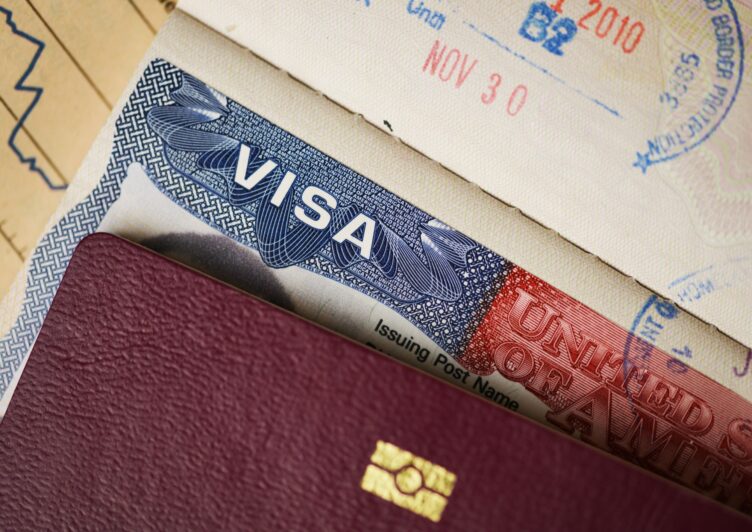
Students from outside the European Union must apply for a student visa to study in Italy.
The visa application usually requires:
- a university admission letter
- proof of accommodation
- health insurance
- financial proof
International students can work up to 20 hours per week while studying.
Discover all you need to know on italian student visa here.
Tuition Fees and Cost of Living
One of the reasons many international students choose Italy is the relatively low cost of university education.
Public university tuition fees generally range between €1,000 and €3,500 per year, depending on the institution and the student’s financial situation, with an average cost around €1,500 per year.
Private universities may have higher fees, but they are still often more affordable than universities in countries such as the United States or the United Kingdom, where tuition fees can exceed $30,000 – $50,000 per year.
Students should also consider the cost of living, which varies depending on the city.
Prepare for University in Italy
Preparing to study in Italy involves several steps, from learning the language to enrolling at university.
We have designed dedicated pathways to guide students through this entire process.
We help international students:
- learn Italian and prepare for official B2 certifications
- apply for a student visa and residence permit
- find accommodation in Italy
- prepare for university enrollment
We also offer different program speeds and durations, allowing students to progress at their own pace while experiencing life in Italy and traveling across Europe.
Discover our University Pathways
FAQ
What is the Italian university grading system?
Italian universities usually grade exams on a scale from 18 to 30.
- 18 → minimum passing grade
- 30 → highest score
- 30 e lode → highest distinction with honors
The final degree grade is usually calculated on a scale from 66 to 110.
How many hours is one CFU credit?
One CFU credit generally corresponds to around 25 hours of academic work, including lectures, individual study, and exam preparation.
Are Italian university degrees recognized internationally?
Yes. Because Italy follows the Bologna Process, Italian degrees are recognized across Europe and are generally comparable to international Bachelor’s, Master’s, and PhD degrees.
Can students retake exams in Italy?
Yes. In most universities, students can retake exams during later exam sessions if they want to improve their grade.
What does “Fuori Corso” mean?
In Italy, students may take longer than the standard duration to complete their degree.
When this happens, they are considered “fuori corso”, meaning they continue studying beyond the official program length.
For example:
- Bachelor’s program duration → 3 years
- Student graduates in 4 years
This situation is relatively common and universities usually allow students to continue their studies with additional enrollment.
Do international students need an entrance exam?
Many programs do not require entrance exams, but some fields such as medicine, architecture, and engineering may require specific admission tests.
Can students change degree program and transfer exams?
Yes. In many cases, students can change degree program and transfer previously completed exams if there is sufficient academic relevance between the old and new course of study.
Can international students work while studying in Italy?
Yes. International students can work up to 20 hours per week while studying.