

Planning to study in Italy is exciting, but the paperwork involved requires careful preparation, and many delays or problems happen because of avoidable mistakes.
This guide explains the most common mistakes international students make and how to avoid them.
Please note that visa requirements may vary depending on your country of residence, the institution responsible for your application, and the type of course you are attending. Always check the official instructions provided by the relevant Italian Embassy or Consulate before submitting your application.
Common Student Visa application mistakes
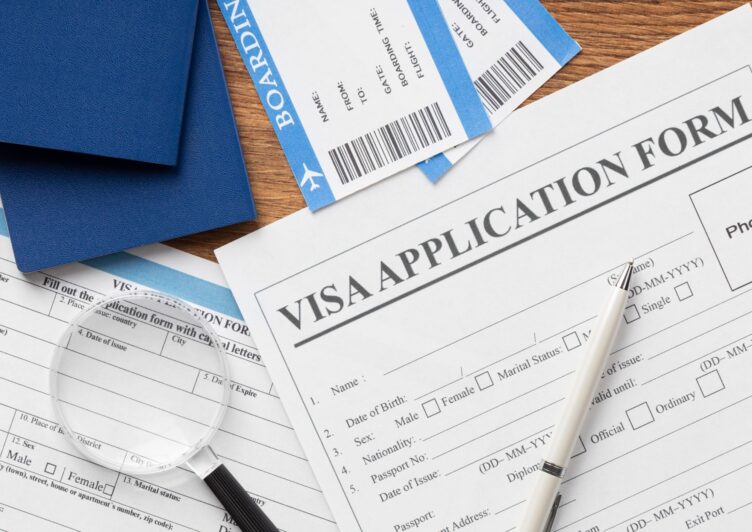
Applying for the student visa too late
In general, visa applications should not be submitted more than 6 months before the intended travel date and, as a rule, should be submitted no later than 15 calendar days before departure.
However, 15 days may be too short if documents are missing, translations are required, or the Embassy or Consulate asks for additional information.
What to do instead: Start preparing as early as possible. As a practical recommendation, begin the process at least 3 months before your planned departure, especially if you need to collect bank statements, certificates, translations, accommodation documents or course-related paperwork.
Not checking the specific requirements of your Italian Embassy or Consulate
Visa requirements for Italy may vary depending on your nationality, country of residence, length of stay and type of course.
The Italian Embassy or Consulate responsible for your application may also request additional documents, and relying only on generic information or advice from other students can lead to missing documents or incorrect assumptions.
What to do instead:
Before preparing your application, always check:
- the website of the Italian Embassy or Consulate responsible for your country
- the official Visa for Italy portal
- the documents required for your specific type of course
- financial requirements
- accommodation requirements
- health insurance requirements
- whether translations, legalizations or apostilles are needed
- whether a specific Italian language level is required
Assuming that the required Italian language level is always the same
It is not accurate to say that the required Italian language level is always A2.
The language requirement may vary depending on the course and the Italian Embassy or Consulate handling the application.
Some courses may require basic or intermediate knowledge, while others may require a higher level or specific proof of language ability.
What to do instead: Always check the minimum Italian language level required by your course or by the relevant Italian Embassy or Consulate, and whether an official language certificate is needed.
Presenting unclear or last-minute financial proof
Students applying for a study visa for Italy must usually show that they have sufficient financial means to support themselves during their stay.
A common mistake is depositing money into a bank account shortly before the visa appointment, without being able to show a stable and consistent financial situation.
This may raise doubts about whether the funds are genuinely available.
What to do instead:
Prepare your financial documents in advance as you may need:
- recent bank statements
- bank history for several months
- documents from a sponsor or family member
- scholarship confirmation
- proof of course payment
- proof of accommodation, if available
Quick tip: Avoid treating a fixed amount, such as “€550-600 per month”, as a universal rule. The minimum amount required should always be checked. Also, if accommodation has not already been paid for, higher financial resources may be required.
Not checking whether official translations are required
Some offices may accept documents in English, while others may require official translations, and procedures are not always the same in every country.
What to do instead: Before translating, legalizing, or apostilling any document, check with the Embassy or Consulate. Make sure you know which languages are accepted, when an official translation is required, who is authorized to complete it, and when legalization or apostille is needed.
Writing a weak or inconsistent motivation letter
When required or recommended, the motivation letter is an important part of the application.
It should clearly show that your study project in Italy is coherent to your academic, personal or professional background.
What to do instead: Write a clear, concrete motivation letter. Ideally, it should be around one page, approximately 400-600 words. Use it to explain who you are, your educational background, why you chose this course, and why you chose Italy. You should also show how the course connects to your future goals and how you plan to finance your stay.
Quick tip: Avoid presenting work in Italy as your main source of financial support. A residence permit for study may allow part-time work within specific limits, but future work should not be presented as your main or guaranteed source of income for the visa application.
Underestimating the consular interview
In some cases, applicants may be asked to attend a visa interview at the relevant Italian Embassy or Consulate.
The interview is an important part of the application process and may be used to assess the purpose of your stay, the consistency of your documents, your financial situation and your plans after your time in Italy.
Unclear or incomplete answers can weaken your application, especially if they do not match the information provided in your documents.
What to do instead: Prepare for the interview carefully and make sure your answers are clear and consistent with your application. You should also be ready to explain your study or travel plans in a simple and convincing way, and to provide details about your situation
Possible questions include:
- Why do you want to go to Italy?
- Why did you choose this course or program?
- Why did you choose this school, university or institution?
- How long do you plan to stay in Italy?
- Where will you live during your stay?
- How will you finance your stay?
- Who is financially supporting you, if applicable?
- What do you plan to do after your stay in Italy?
- Have you prepared health insurance and accommodation documents?
Leaving family-related procedures until too late
If you plan to move to Italy with family members, or if your stay involves a family-related procedure, it is important to check the correct process before applying for the visa because waiting until you are already in Italy may create complications or delays.
What to do instead: Contact the relevant Italian Embassy or Consulate in advance to confirm which procedure applies to your situation, which documents are required, whether the family-related request should be submitted together with the main visa application, and what timeline you should expect.
Using a tourist visa for a long-term study project
A risky mistake is entering Italy as a tourist when the real purpose of the stay is to attend a study program that requires a student visa.
A tourist visa is intended for short stays, up to 90 days, and does not allow the same rights and procedures as a study visa.
What to do instead: Do not enter Italy with a tourist visa assuming that you will be able to easily change your status after arrival. If your goal is to study in Italy for a period that requires a student visa, prepare the correct procedure before travelling.
Relying only on general visa rules
Although there are general rules for study visa applications, each Italian Embassy or Consulate has the authority to assess applications according to its own procedures and the applicant’s specific situation.
Requirements may vary depending on the country, the consular office, and other factors. This means that documentation standards, proof of financial means, required Italian language level, and administrative processing may differ from one place to another. For example, one consular office may request A2 Italian, while another may expect B1 or additional supporting documents.
What to do instead: Before starting your application, contact the visa section of the Italian Embassy or Consulate responsible for your country of residence. Ask for the most up-to-date checklist of requirements and make sure you understand exactly which documents, language certificates, financial proof, and timelines apply to your specific case
Common Residence Permit application mistakes
Thinking that the student visa is enough to stay in Italy
The student visa allows you to enter Italy, but for long stays, it is not enough on its own. After arriving in Italy, students must usually apply for a residence permit.
The Polizia di Stato states that non-EU nationals planning to stay in Italy for more than three months must apply for a residence permit within 8 working days.
What to do instead: Do not delay the residence permit application after arriving in Italy and always remember that while the visa allows you to enter Italy, the residence permit allows you to stay in Italy legally.
Making mistakes in the residence permit application
When applying for a residence permit, incomplete documentation or incorrectly filled forms can cause delays, requests for additional documents or problems with your application.
A common mistake is forgetting to include copies of all required documents, submitting originals instead of copies, or leaving some fields of the application form incomplete.
What to do instead: Before submitting your application, carefully check that all required documents are included as copies or duplicates, unless originals are specifically requested. Make sure every field of the form is completed accurately and that your personal details match your passport exactly. Keep the original documents with you, as you may need to show them later at your appointment with the Questura.
Quick tip: For information on the procedure for the issue and renewal of residence permits, you can also consult the official Portale Immigrazione, which provides guidance on residence permit applications and related procedures.
Losing the residence permit receipt or not monitoring the application
After submitting your residence permit application, the receipt becomes a very important document, as it proves that your application has been officially submitted. It should be kept carefully and carried with you when needed.
The procedure can also be delayed if you miss your appointment at the Immigration Office, arrive unprepared, or fail to provide any additional documents requested by the Questura.
What to do instead: Keep the original residence permit receipt in a safe place and carry a copy with you when needed. Check the status of your application regularly, pay attention to any communication from the Questura, and make sure you attend your appointment on time. Before the appointment, prepare all original documents, the required passport photos, the postal receipt, and any additional documents that may have been requested.
Waiting too long to renew the residence permit
If your study program continues beyond the validity of your first residence permit, you must prepare the renewal in advance, as waiting until the permit is close to expiry can create difficulties with administrative procedures and everyday life in Italy.
What to do instead: Start preparing the residence permit renewal well before the expiry date. As a practical recommendation, begin around 60 days before the permit expires.